By Gabriel Eronmosele, Erons Travel, Fargo, ND · Last verified September 28, 2026
Quick answer:
- For most long-haul trips, build the plan around Minneapolis–St. Paul (MSP).
- Fargo (FAR) works well as a feeder when the whole trip is on one ticket with a generous first layover.
- Grand Forks (GFK) is a positioning option when the schedule is clean.
- The right airport depends on your destination, dates and total trip cost.
There is no single “North Dakota airport” for a serious international trip.
Each of the three does a different job, and the wrong choice costs you a missed bag, a weather delay or a connection that only works on paper. We plan trips every week for clients in Fargo, West Fargo, Moorhead, Grand Forks, Bismarck and the Twin Cities, and routing is always the first decision.

Image courtesy of Intricate Explorer on Unsplash
What each airport is good for
MSP is Delta’s hub, with the deepest schedule to Europe, Mexico, the Caribbean and the West Coast banks that connect to Asia. If the trip is Italy, Japan, Kenya or the Maldives, plan around MSP even if you live two hours west.
FAR is a dependable feeder to MSP, Chicago, Denver and other hubs.
It is a strong start for many leisure trips when the first layover is honest. We like 90 minutes or more on international days, and more in January.
GFK offers thinner inventory. For a honeymoon, a safari or a Europe trip, we use it only when the schedule is clean, and we don’t force it.

Image courtesy of Rocker Sta on Unsplash
The rule we plan by: protect the scarce seat first
The scarce seat is usually the transatlantic or transpacific cabin, or the last business-class seat into Nairobi, Tokyo or Paris. We secure it first, then work out whether FAR or GFK can deliver you to it without heroics.
If the international flight leaves MSP before 9 a.m., or the forecast looks like a Red River Valley winter, we would rather put you in a Twin Cities hotel the night before than gamble on a 6 a.m. Fargo departure. One hotel night costs far less than rebooking a safari camp.

Image courtesy of Nicole Geri on Unsplash
Drive to MSP or fly from FAR?
Driving is the better call when:
- The long-haul leaves early and there is no sensible evening-before flight
- Three or more of you are traveling and fares plus bag fees erase the convenience
- You want a car available if the first flight cancels
Flying is the better call when:
- The feeder and long-haul are on one ticket, so the airline owns a misconnect
- The layover is long enough to be real
- It is winter and you would rather not drive I-94 with luggage

Image courtesy of Nicolas J Leclercq on Unsplash
What changes for a Fargo, Grand Forks or Bismarck departure
Fargo–Moorhead travelers should weigh the drive to MSP against a cheaper fare, since the drive is long enough to change the math.
- From Grand Forks, compare GFK, FAR and MSP rather than assuming the closest airport wins.
- From Bismarck, the best hub may be different again.
- Search from your real home airport, then compare the whole door-to-door day.
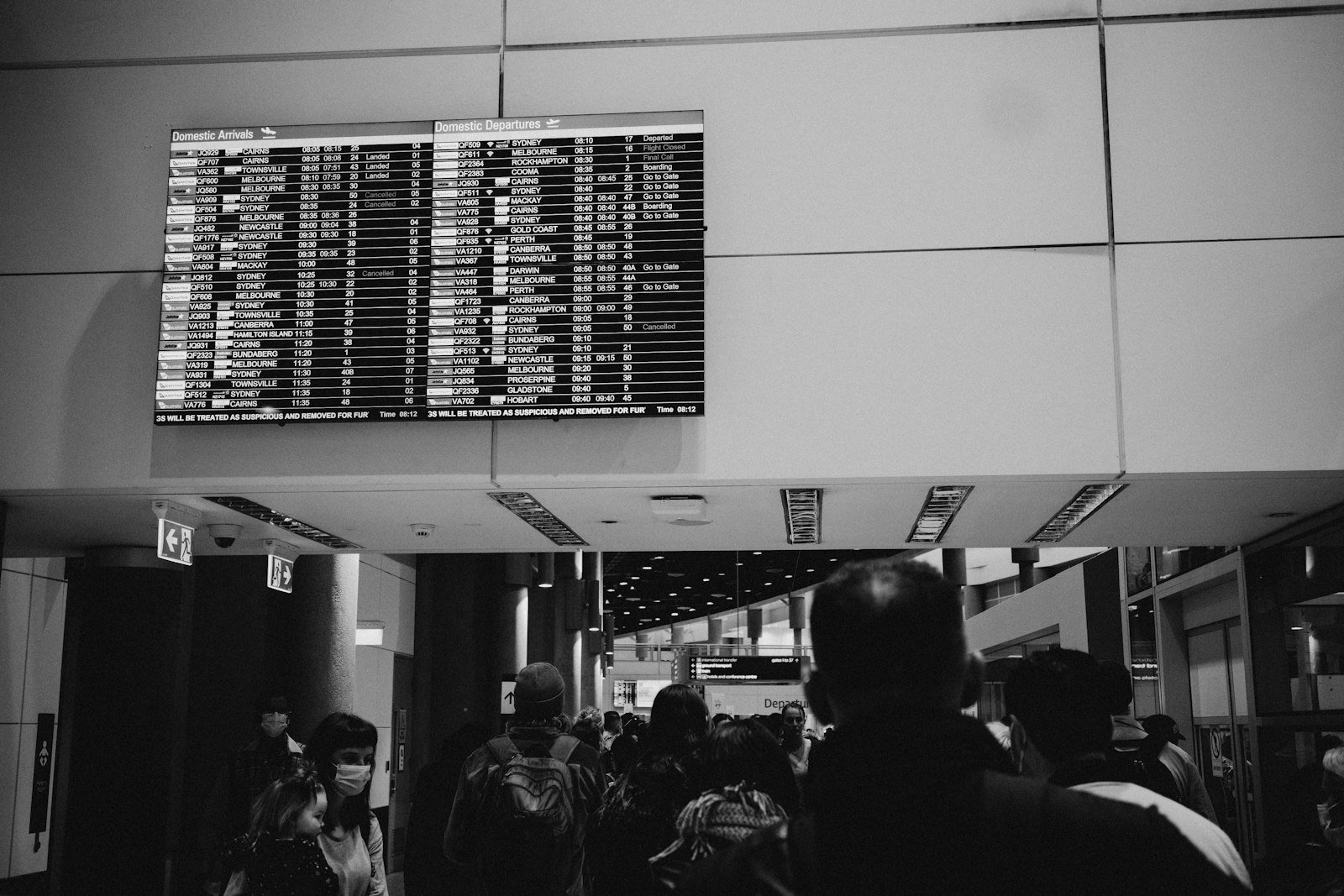
Image courtesy of Joseph Bobadilla on Unsplash
FAQ
Do you book the Fargo or Grand Forks flight too?
Yes. The first leg and the long-haul are planned as one itinerary in our office, which keeps connections protected.
Is MSP always cheaper or better?
No. Compare the final price after parking, bags, a hotel night and your time. For a Saturday beach trip in March, FAR through a hub can be the whole answer.
How much connection time is enough?
Airline minimums are only a starting point. We use at least 90 minutes on international days, more in winter, and we avoid the last flight of the evening.
How do I choose an airport for my trip?
Tell us your destination and month. We will recommend the airport that should anchor the trip before we talk hotels.
Book a consultation · info@eronstravel.com · +1 (701) 729-6352