Quick answer:
- Base yourself in the south near the Pitons for drama and adventure, or in the north around Rodney Bay for beaches and resort life.
- Plan five to seven days, which is enough to split your stay between the two without island-hopping.
- Mid-December through May is the dry season and the most comfortable time to go.
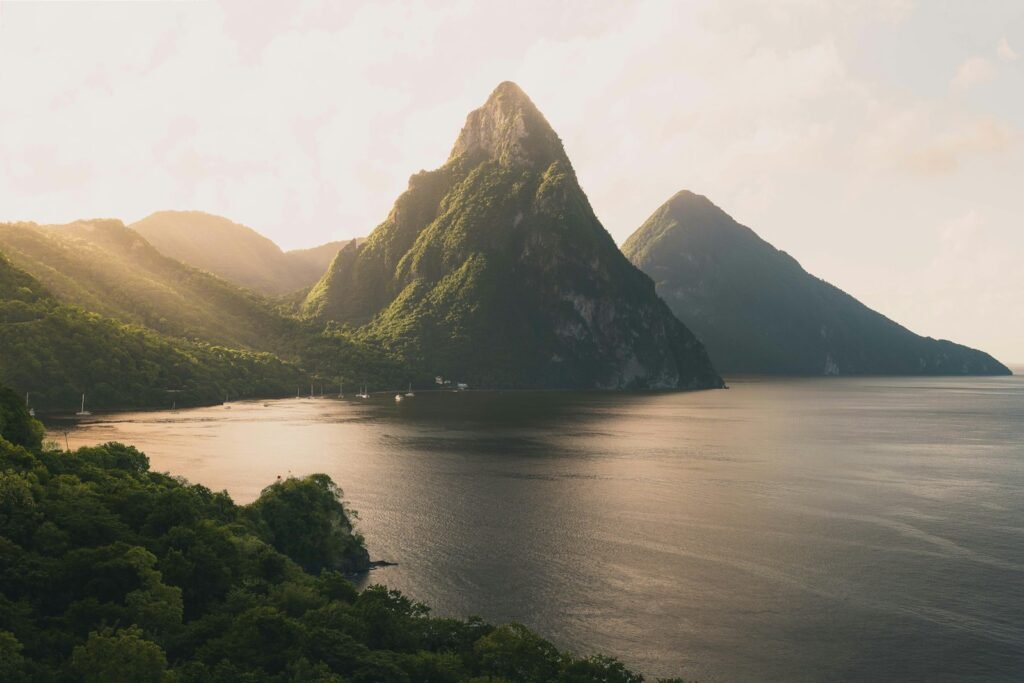
St. Lucia packs a lot into one Caribbean island: steep volcanic scenery, a deep Creole heritage and an easygoing coastal pace. Down south, the UNESCO-listed Pitons tower over green rainforest, with mud baths at Sulphur Springs and mineral-streaked waterfalls close by. Up north, things slow into golden beaches, lively resort towns and old ruins. Between rainforest zip-lines, offshore reefs and markets selling fragrant Creole food, it works as well for an active trip as for a slow, romantic one.
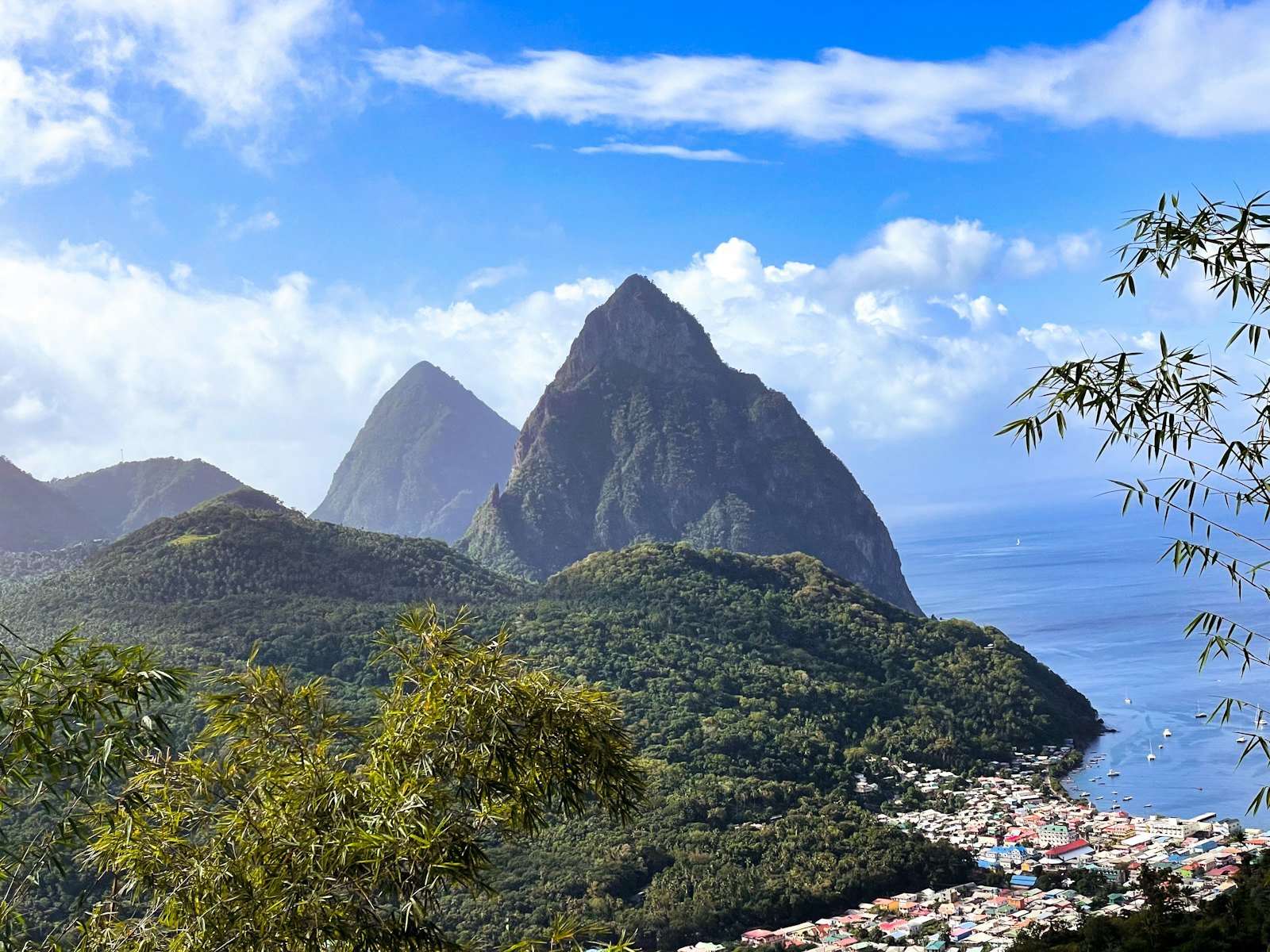
Image courtesy of Faith Panciello on Unsplash
Need to know before you go
St. Lucia’s terrain and local rhythm reward a little planning before you land. And keep in mind that island time runs at its own unhurried speed.
Money and tipping
- The local currency is the Eastern Caribbean Dollar (XCD), but U.S. dollars are taken widely at resorts, tourist sites and in taxis.
- Bring cash for small local restaurants, markets and rural areas.
- Hotel and restaurant bills may carry a 10% service charge plus VAT (7% on rooms, 10% on restaurant food and drink). Sometimes these are already built into the quoted price.
- For good service, a tip of roughly 10–12% is customary.
Language
English is the official language, though most St. Lucians also speak Saint Lucian French Creole, known as Kwéyòl or Patois. You can get through the whole trip in English, but a few local greetings go a long way.
- bonjou: hello / good morning
- bonswè: good evening
- mèsi: thank you
- souplé: please
- kouman ou yé?: how are you?
- wi / non: yes / no
- mwen pa ka palé Kwéyòl: I don’t speak Kwéyòl
- ès ou ka palé Anglé?: do you speak English?
Airports
- Hewanorra International (UVF): direct year-round service to cities including Miami, New York, Toronto and London, plus seasonal flights to Charlotte and Philadelphia.
- George F. L. Charles (SLU): the smaller airport, handling regional hops to Antigua, Barbados, St. Vincent and other islands.
Getting around
- Most visitors use private drivers or official taxis, which you can spot by their blue plates starting with “TX.”
- Driving is on the left, on steep, winding mountain roads, so renting a car can be tough going.
- By road, Hewanorra in the south to the northern resort areas takes about 1.5 to 2 hours.
- Water taxis and private boats link some coastal spots and make a scenic shortcut; a helicopter is the fastest way between the airports and the resort areas.
When to go
- Dry season (mid-December to May): lower humidity, steady trade winds and the best overall conditions.
- Wet season (June to mid-December): hotter, more humid and prone to short tropical downpours; October is usually the wettest month.
- Hurricane season: June through November, generally peaking around September.
How long to stay
I recommend five to seven days. That gives you time for the volcanic landscape and the trails around Soufrière, and even lets you split your stay between the mountainous south and the beaches around Rodney Bay in the north, all without leaving the island.
What to pack
- Light, breathable fabrics such as linen for the heat and humidity.
- Swimwear for the beach, plus something to cover up for towns and markets.
- Sturdy trail shoes or grippy sneakers for muddy Piton climbs, windy lookouts and uneven steps.
- Smart-casual outfits for resorts: collared shirts, flowy dresses, linen trousers.
- A light layer or rain shell for sudden showers and breezy ridges.
Travel tips
- Arrival form: many travelers, including those from the U.S., currently need to fill out an electronic travel authorization or border form before arriving.
- No camouflage: civilians are not allowed to wear camouflage clothing.
- Motion sickness: the hilly, narrow, winding roads can be rough if you’re prone to it. Sit up front, keep your eyes on the horizon, open a window, and consider over-the-counter or natural remedies.
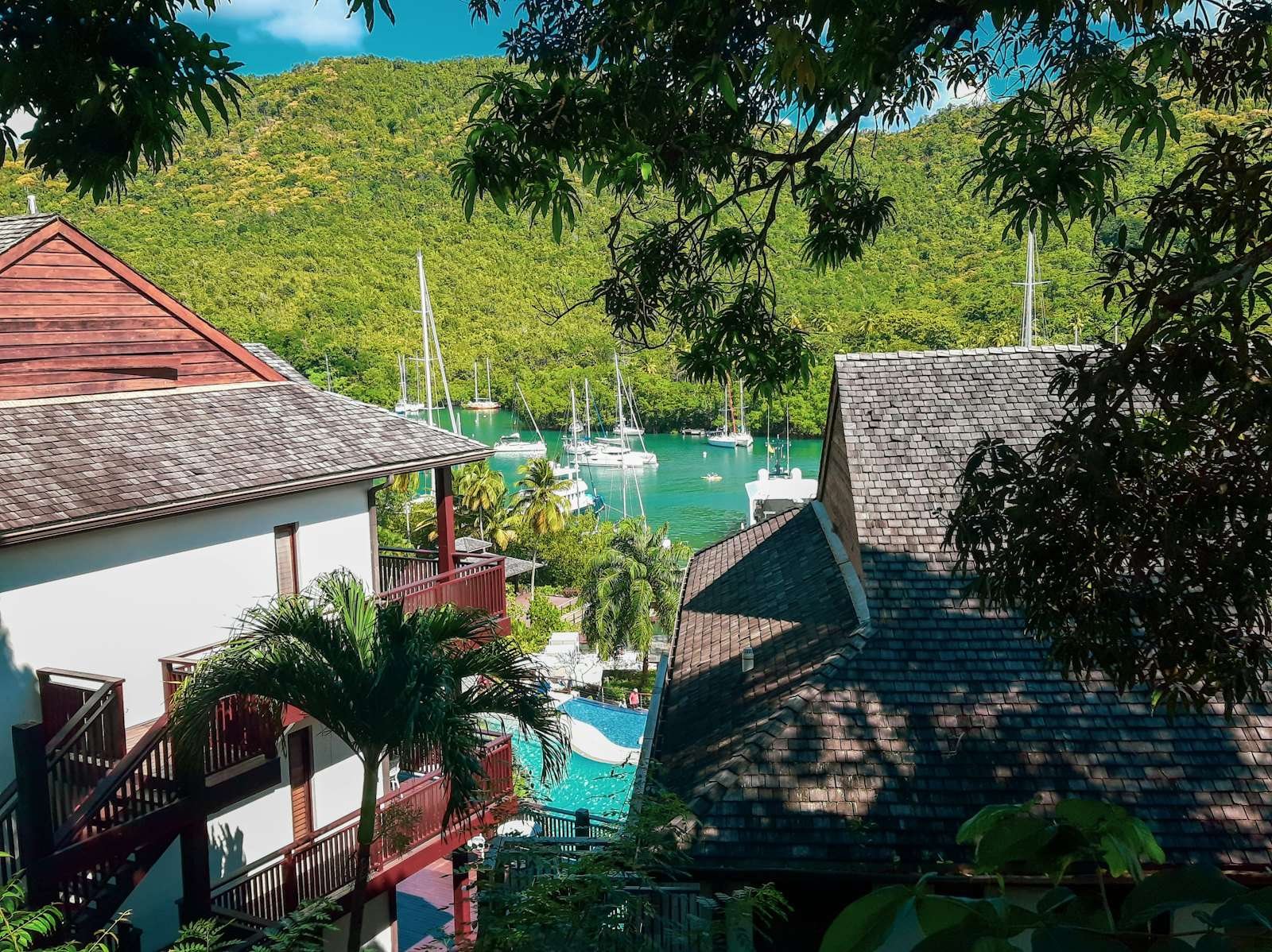
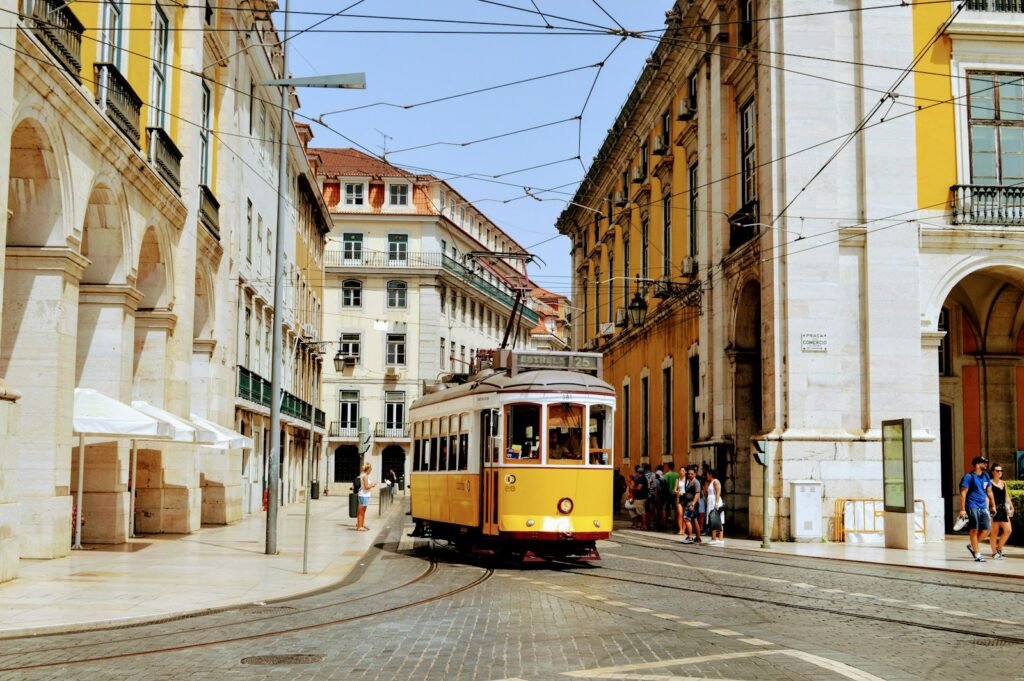
Image courtesy of Germine Sealy on Unsplash
A closer look at St. Lucia
The island’s character changes from town to town along its volcanic coast.
- Castries: the capital and commercial center on the northwest coast, built around a busy deepwater harbor and shopping centers.
- Gros Islet: home to the resort strip around Rodney Bay and the well-known Friday night street party.
- Marigot Bay: a postcard harbor full of luxury yachts on the western shore.
- Soufrière: the historic southwestern town backed by the twin Pitons, geothermal springs and botanical gardens.
- Vieux Fort: a cultural and industrial hub at the southern tip and the main gateway for international flights.
Where to stay in St. Lucia
These are the properties I recommend. Several are preferred partners, so ask me about the access that may apply for your dates.
Sugar Beach, A Viceroy Resort
Tucked into a green rainforest valley between the Pitons, with a white-sand beach, butler-serviced villas with private plunge pools and an award-winning treehouse spa.
- Preferred-partner access may apply at this property when you book through me. Ask me for details for your dates.
Jade Mountain Resort
An exclusive, ultra-luxury hillside retreat and an architectural standout, known for open-air “sanctuaries” that mostly have private infinity pools and no fourth wall, so nothing stands between you and the Pitons.
- Preferred-partner access may apply at this property when you book through me. Ask me for details for your dates.
Cap Maison Resort & Spa
A Spanish-Caribbean boutique resort on an oceanfront bluff at the island’s northern tip, with villa-style rooms and clifftop dining. It’s a quiet, romantic pick for a secluded getaway.
- Preferred-partner access may apply at this property when you book through me. Ask me for details for your dates.
BodyHoliday
A wellness-focused all-inclusive on a secluded cove on the north coast, mixing beach time with a full daily lineup of fitness classes, spa treatments, watersports and holistic therapies.
- Preferred-partner access may apply at this property when you book through me. Ask me for details for your dates.
Ladera Resort
An adults-only luxury resort with eco-friendly suites built from local hardwoods, open-air fourth walls and private plunge pools looking out at the Pitons. Best for couples who want a peaceful, romantic mountain hideaway surrounded by nature.
- Preferred-partner access may apply at this property when you book through me. Ask me for details for your dates.
Windjammer Landing Resort and Residences
A Mediterranean-style village terraced up a steep hillside, with roomy multi-bedroom villas and private pools, several restaurants and a calm beach. It’s best for families and multigenerational groups.
- Preferred-partner access may apply at this property when you book through me. Ask me for details for your dates.
Sandals
Three couples-only all-inclusives on the island. Sandals’ Stay at 1, Play at 3 program lets eligible guests use the other two resorts.
- Sandals Grande St. Lucian: on a calm Rodney Bay beach, with overwater bungalows.
- Sandals Regency La Toc: a large hillside estate near Castries with dramatic sunsets and green fees included at Cap Estate Golf & Country Club.
- Sandals Halcyon Beach: a quieter, low-rise beach resort built around intimacy.
Zoëtry Marigot Bay
A quiet hillside all-inclusive centered on boutique luxury, personal service and wellness treatments, for travelers who would rather have marina views, calm spa programs and fine dining than a classic beachfront setup.
Royalton Saint Lucia
A modern all-inclusive with several pools and restaurants, a spa and three separate sections, including family-friendly rooms and the adults-only Hideaway area.
Planning a wedding or honeymoon here? See my destination weddings guide, which covers Sugar Beach and St. Lucia alongside other Caribbean islands, and my Insider’s Guide to Jamaica if you’re weighing another island.
Cruising to and around St. Lucia
St. Lucia appears on many Caribbean itineraries. Ships tie up in Castries at either Pointe Seraphine or La Place Carenage, which puts you steps from duty-free shopping, land tours to the Pitons and catamaran trips along the coast.
Typical itineraries
- One-week Lesser Antilles sailings from hubs such as San Juan or Bridgetown, usually paired with Antigua, Martinique, or St. Vincent and the Grenadines.
- 10- to 14-night Southern Caribbean routes from Miami or Fort Lauderdale, combining St. Lucia with Antigua, Barbados, St. Kitts and St. Vincent, or with the ABC islands.
- Southern Caribbean and Panama Canal voyages that also call at Aruba, Curaçao and Panama.
Cruise lines I recommend
- Regent Seven Seas: an all-inclusive luxury line with all-suite accommodations, fine dining and smaller ships, with shore excursions included. Preferred-partner access may apply on select sailings; ask me for details.
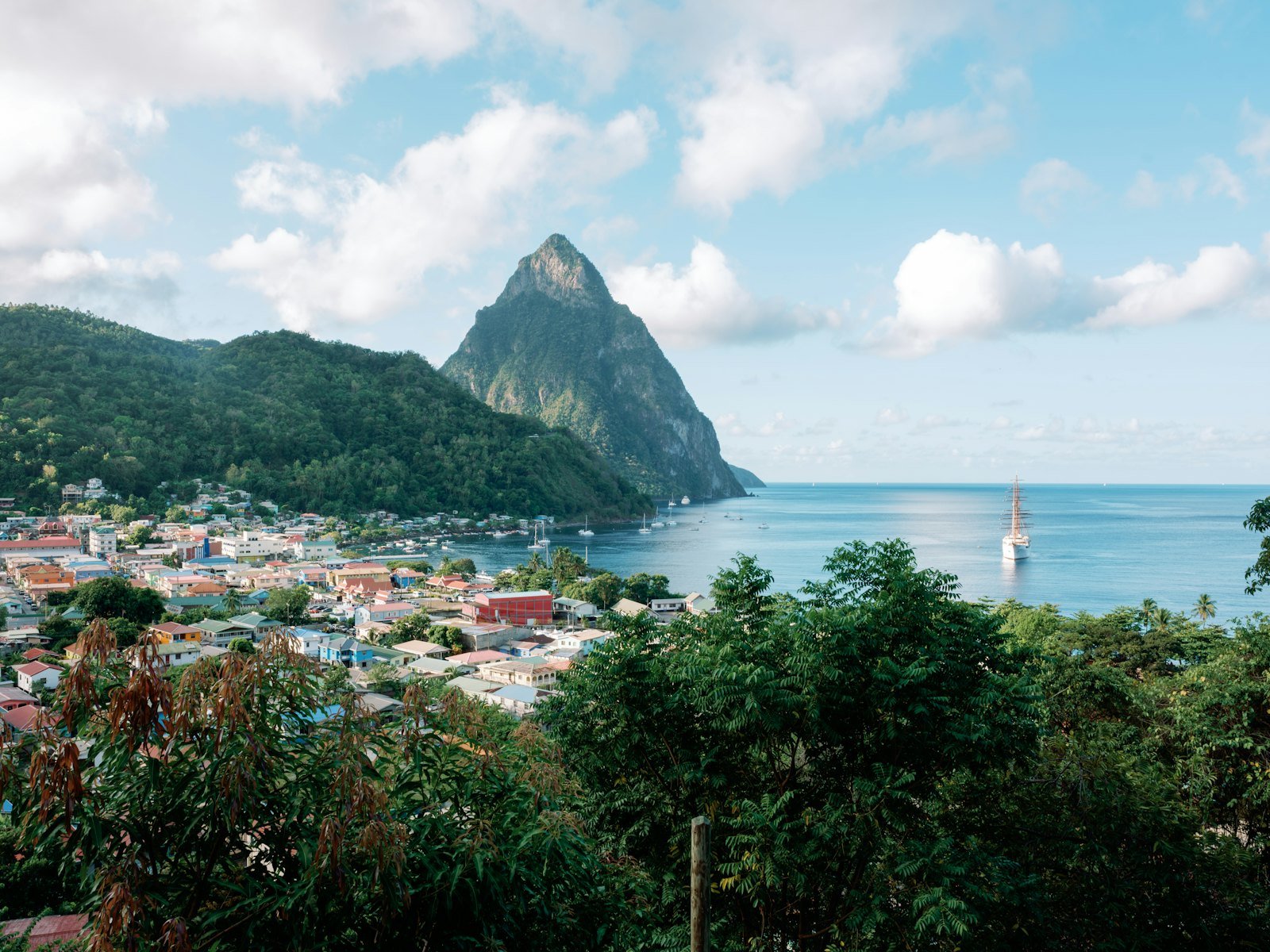
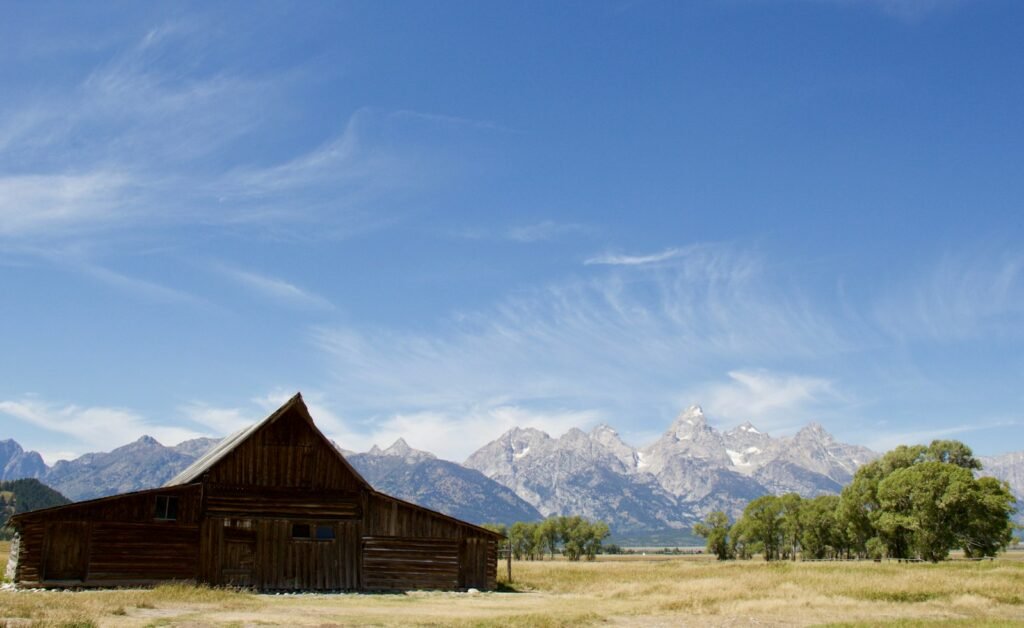
Image courtesy of Karl Moore on Unsplash
St. Lucia’s history and culture
Indigenous peoples, including the Arawak and Kalinago, shaped the island before Europeans arrived. From the 17th century on, France and Britain traded control of St. Lucia 14 times, drawn by its strategic position and its valuable sugar plantations, before it became British in 1814. That double colonial past, together with the history of enslaved Africans, produced the Creole culture that is still very much alive.
St. Lucia became fully independent from the U.K. in 1979. Its culture shows in the French-influenced Creole language, colorful street festivals and an intellectual legacy that includes two Nobel Laureates, Sir Arthur Lewis and Derek Walcott. Today, traditional Quadrille dancing and steelpan music sit comfortably alongside a warm, relaxed island lifestyle.
What to eat and drink
- Green fig and saltfish: the national dish, unripe green bananas (called “figs” locally) boiled and served with flaked salt cod sautéed with onion, garlic, peppers and local herbs.
- Bouyon: a hearty, slow-cooked soup-stew of pork, beef or fish with red beans, plantains, root vegetables and chewy hand-rolled dumplings.
- Lambi: conch pounded tender and slow-cooked in a rich garlic and Scotch bonnet sauce or a curry.
- Cocoa tea: a beloved morning drink of cocoa sticks, cinnamon, nutmeg and bay leaf boiled in water and milk.
- Sorrel: a festive deep-red drink of dried hibiscus steeped with fresh ginger, cinnamon and cloves, sweetened with cane sugar and poured over ice.
Festivals and events
- Gros Islet Friday Night Street Party (every Friday): a decades-old weekly party that turns a sleepy northern fishing village into an outdoor block party with grilled meats, loud music and rum punch late into the night.
- Independence Day (February 22, island-wide): a national holiday marking independence from Britain in 1979, with parades, cultural displays and traditional music.
- Saint Lucia Jazz & Arts Festival (April–May): one of the Caribbean’s top cultural events, mixing international headliners with local jazz, reggae and calypso, plus art exhibitions.
- Saint Lucia Carnival (July, island-wide): weeks of soca and calypso competitions and steelpan, ending in two days of costumed masquerade bands parading through Castries.
- Jounen Kwéyòl / Creole Day (last Sunday of October): host communities rotate each year to celebrate African and French heritage with madras clothing, folk music, Kwéyòl storytelling and local feasts.
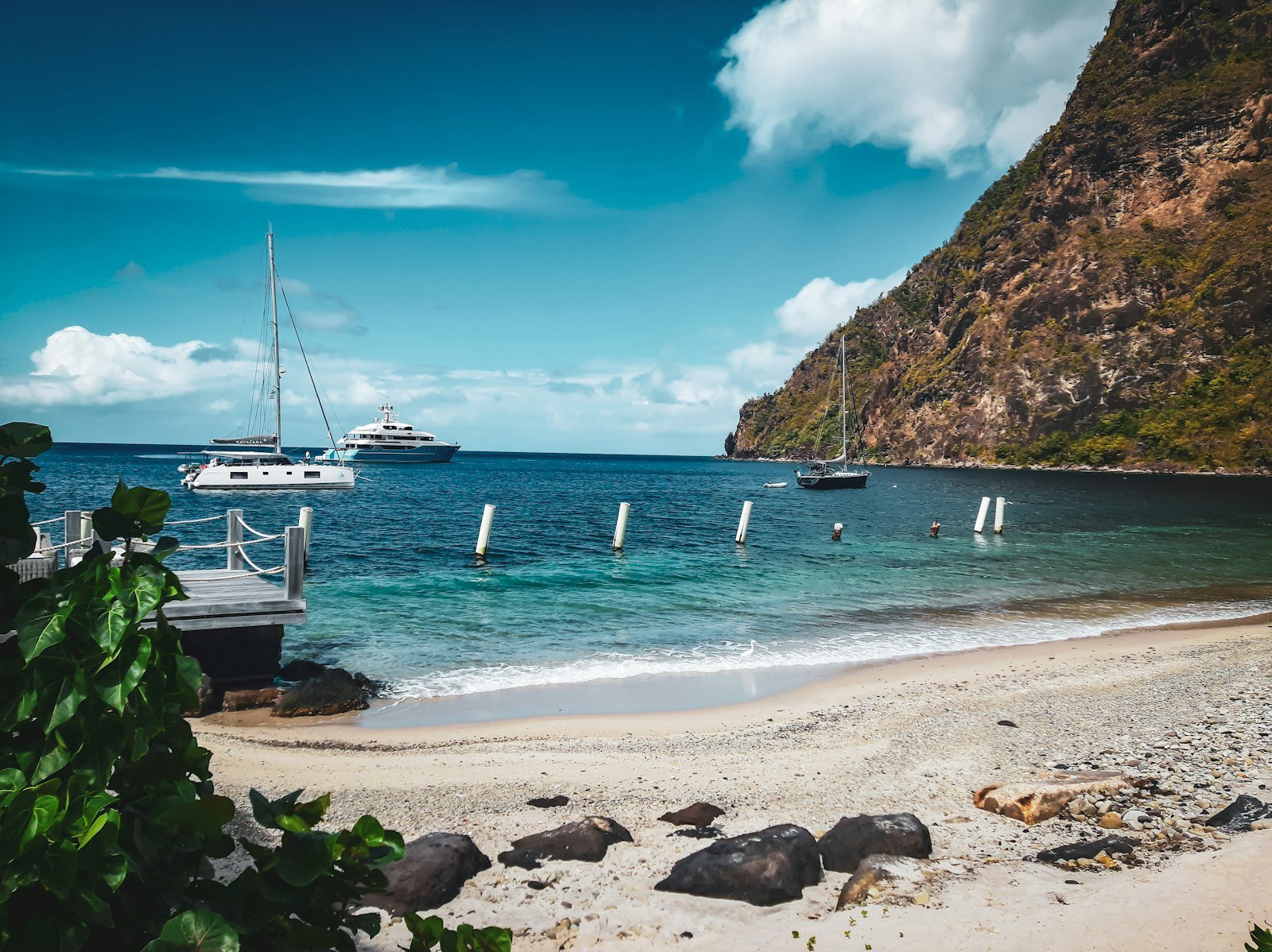
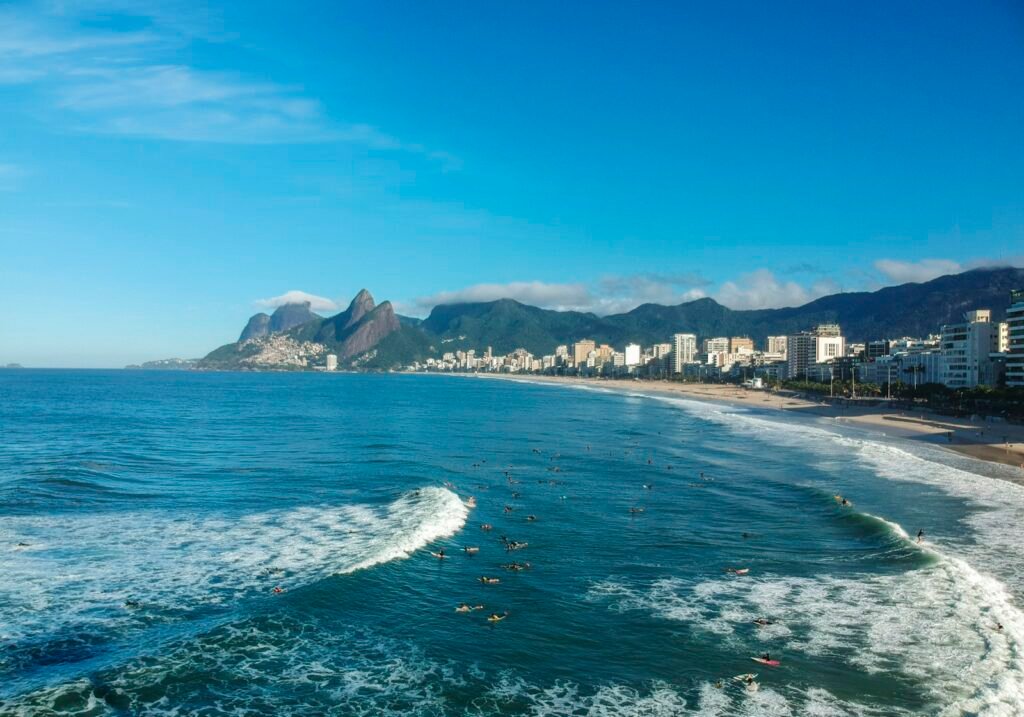
Image courtesy of Germine Sealy on Unsplash
What to do in St. Lucia
Between volcanic spires, rainforest and busy markets, St. Lucia mixes Caribbean scenery with a rich island culture.
- The Pitons: climb Gros Piton for huge Caribbean views, or take the Tet Paul Nature Trail to see both peaks without the steep vertical climb.
- Sulphur Springs: visit this drive-in volcano in Soufrière for steam vents, bubbling geothermal pools and mineral-rich mud baths.
- Diamond Falls Botanical Gardens: follow winding paths through tropical plants to the mineral-streaked Diamond Falls, then soak in the gardens’ mineral baths.
- Pigeon Island National Landmark: explore the 18th-century ruins of Fort Rodney, hike wooded trails to lookouts and swim at quiet sheltered beaches.
- Catamaran cruise: sail the rugged west coast, anchor in sheltered spots like Marigot Bay and watch the sunset with the Pitons in view.
- Snorkeling and diving: explore colorful coral reefs in the clear water at Anse Chastanet or Sugar Beach.
- Castries Central Market: wander the open-air stalls for fresh tropical fruit, handwoven crafts and freshly ground island spices.
Trips to pair with St. Lucia
Adding a neighboring island or a stopover city lets you see a different culture and coastline on the same trip.
- Barbados (45-minute flight): a major regional hub with a flat coral-island landscape, luxury West Coast beach resorts, UNESCO-listed historic Bridgetown and a lively Bajan food scene.
- Grenada (1-hour flight): the “Spice Isle,” with nutmeg plantations, rum distilleries and the white sand of Grand Anse Beach, a nice counterpoint to St. Lucia’s mountains.
- Antigua (1-hour flight): hundreds of beaches, historic Nelson’s Dockyard and a world-class sailing culture in sheltered turquoise bays, a contrast to St. Lucia’s rainforest.
- Miami (4-hour flight): a handy stopover for North American connections, swapping tropical nature for Art Deco architecture, high-design shopping, nightlife and a thriving Latin American dining scene.
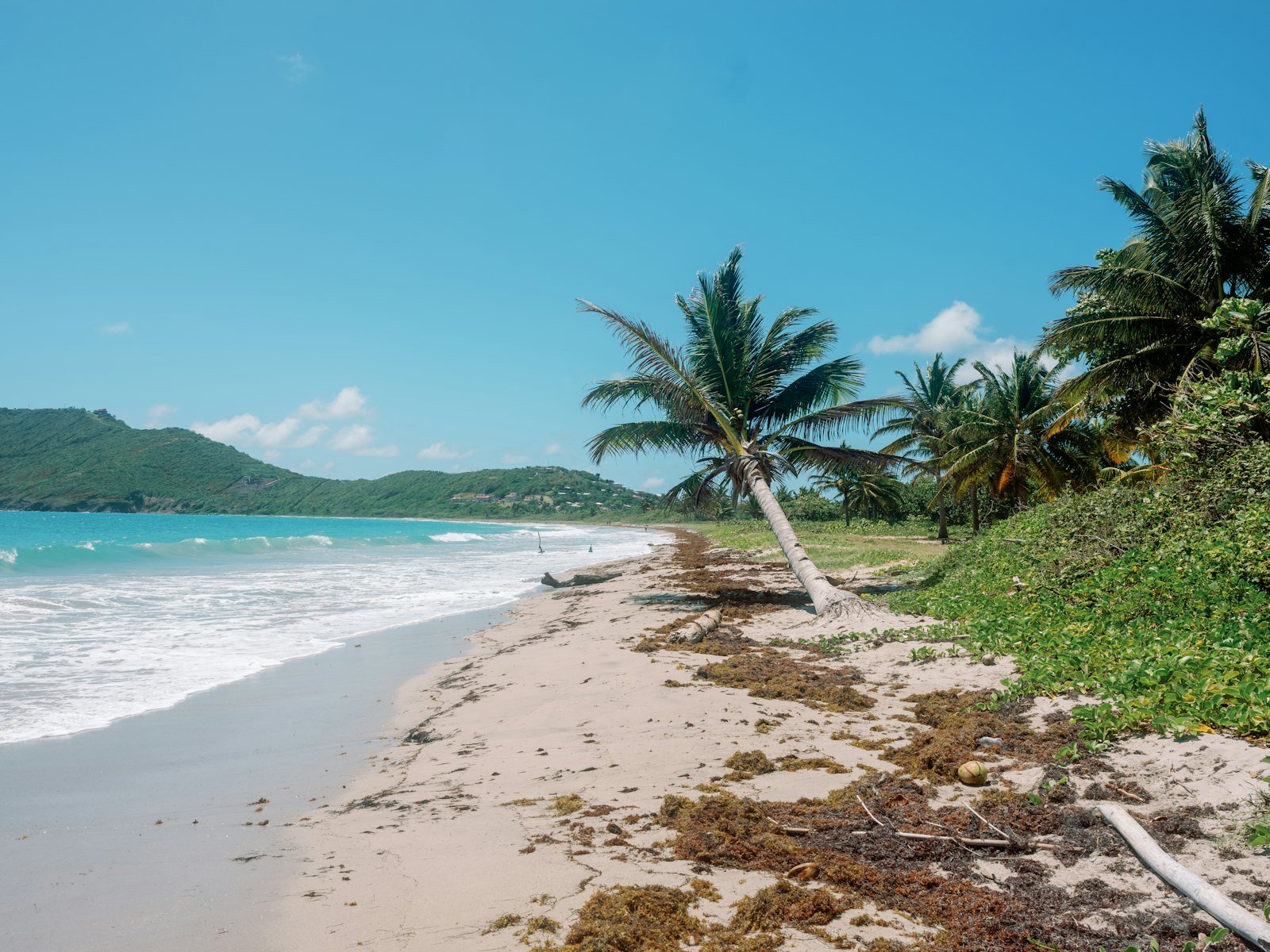
Image courtesy of Karl Moore on Unsplash
If not St. Lucia…
If St. Lucia’s volcanic scenery, rainforests and luxury coastline appeal to you, these places offer a similar blend of nature, culture and easy living.
- Hawai‘i: a volcanic archipelago with St. Lucia-style drama: towering sea cliffs, jungle hikes and active geothermal sites, plus world-class surf and luxury resorts.
- Costa Rica: an eco-adventurer’s favorite that trades island seclusion for dense cloud forest, towering volcanoes and abundant wildlife.
- St. Barths: a glamorous French West Indies island that swaps rainforest for Riviera-style chic, superyacht harbors, luxury boutiques and gourmet beachfront dining.
- St. Vincent and the Grenadines: a quieter, easy-to-navigate chain of 32 islands, with volcanic peaks on St. Vincent and celebrated sailing, private-island retreats and turquoise lagoons across the Grenadines.
Final thoughts
St. Lucia rewards travelers who plan around its geography: choose your base, south or north, around the trip you want, give yourself five to seven days, and line up transfers before you land.
This guide first appeared on Fora Travel.
Short on time? My 4-day St. Lucia itinerary turns the highlights into a day-by-day route from Rodney Bay to the Pitons.
Ready to plan your St. Lucia trip? Contact Erons Travel and I’ll match you with the right resort and transfers.
Book a consultation · info@eronstravel.com · +1 (701) 729-6352